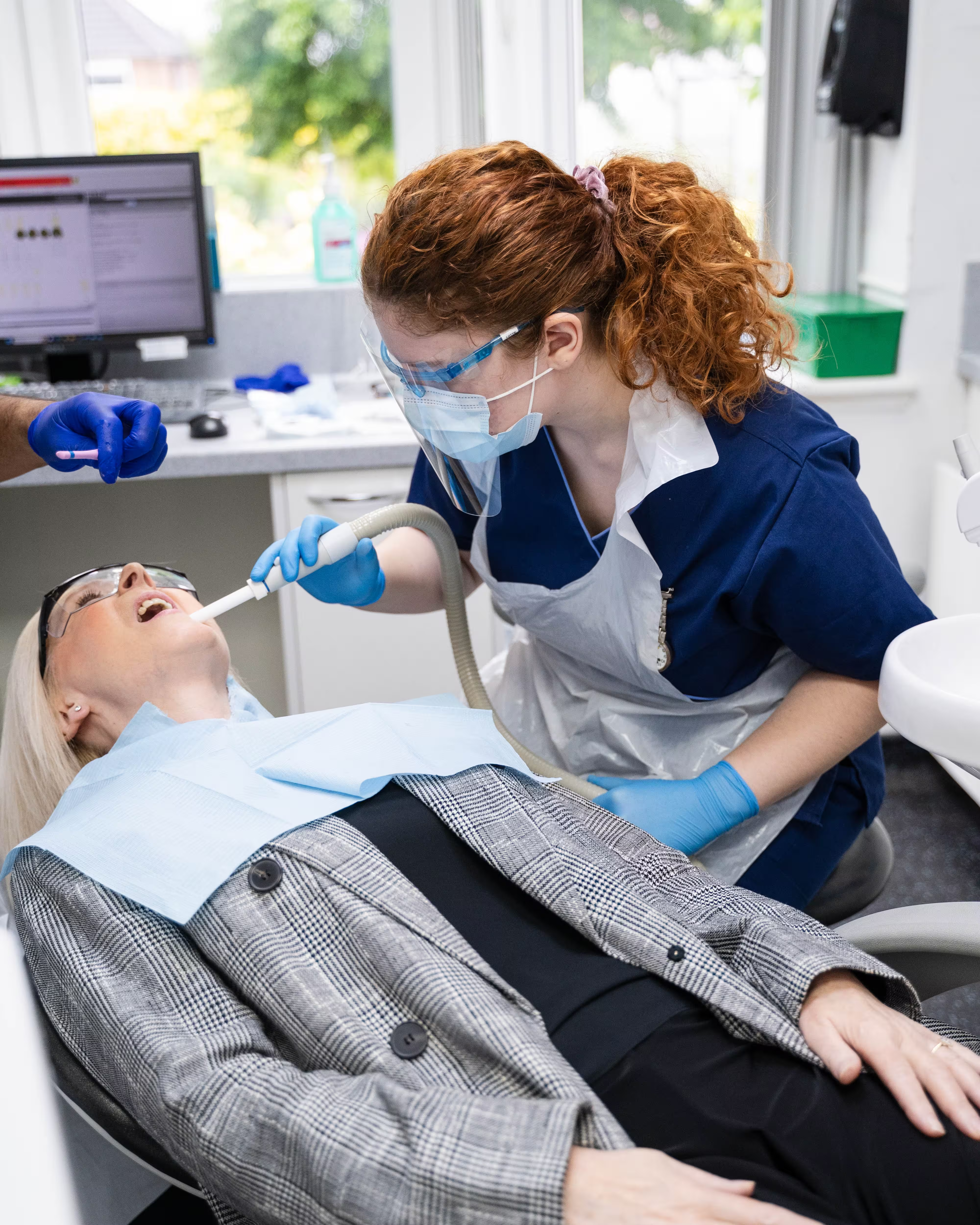
Premolar Root Canal Treatment in Redditch
Premolar root canal treatment removes infected or inflamed pulp from inside a premolar tooth. The canals are then cleaned, disinfected and sealed, and the tooth is restored so you can keep it for many years. At Kingfisher Dental in Redditch, Dr Joshi carries out root canal treatment with a calm, precise approach that keeps your comfort at the heart of every appointment.
You may have been told you need RCT on a premolar, or you may simply suspect something isn't right. Either way, this guide explains what the treatment involves, how it feels and what happens afterwards.
What Is Premolar Root Canal Treatment?
Your premolars sit between your canines and your molars. There are two on each side of your mouth, top and bottom, and they do much of the hard work of crushing and chewing food. Inside each premolar is the pulp, a soft core of nerves and blood vessels that runs down through narrow channels called root canals. When bacteria reach the pulp through deep decay or a crack, it can become inflamed or infected. The tissue can't heal on its own, so it has to be removed.
Premolars are also where experience really counts. Upper first premolars usually have two canals. Upper second premolars have a second canal more often than many people expect. Lower premolars typically have a single canal, but a hidden extra canal is common enough that every tooth needs careful checking. An untreated canal is one of the main reasons root canal treatment fails. That's why Dr Joshi maps the anatomy of every premolar thoroughly before and during treatment.
Signs You Might Need a Root Canal on a Premolar
Pulp problems don't always announce themselves loudly, but common warning signs include:
- Lingering sensitivity: Pain from hot or cold food and drink that lasts well after the trigger has gone.
- Pain when biting: Tenderness when you chew or press on the tooth.
- A throbbing toothache: Pain that may keep you awake or seem to spread to your jaw or ear.
- Swelling or a gum spot: A small pimple-like bump on the gum near the tooth, which often signals an abscess.
- Discolouration: A tooth that has turned darker than its neighbours.
- A cracked or broken tooth: Damage that may have exposed the pulp to bacteria.
If you're in severe pain or have facial swelling, please don't wait. We offer emergency dentist appointments and will do everything we can to see you quickly.
What Happens During Premolar Root Canal Treatment?
Root canal treatment has an unfair reputation. In reality, it's a carefully planned procedure that relieves pain rather than causing it. Here's what to expect at Kingfisher Dental:
- Assessment and X-rays: Dr Joshi examines the tooth and takes X-rays to see the shape of the roots, the number of canals and the extent of any infection.
- Local anaesthetic: The area is fully numbed so you feel comfortable throughout. We check you're completely numb before we begin.
- Protecting the tooth: A thin rubber sheet called a dental dam is placed around the tooth. It keeps the area clean and dry and stops anything from falling to the back of your throat.
- Accessing the pulp: A small opening is made in the top of the premolar to reach the pulp chamber.
- Cleaning and shaping: The infected tissue is removed, and each canal is cleaned, shaped and disinfected along its full length.
- Filling and sealing: The canals are filled with gutta-percha, a rubber-like material, and sealed to stop bacteria getting back in.
- Restoring the tooth: A temporary filling protects the tooth while it settles, and your permanent filling or crown is fitted afterwards. You can read more about temportary filling blog in our patient guide.
Most premolar root canals are completed in one or two appointments of around 60 to 90 minutes. The exact time depends on how many canals the tooth has and how much infection is present.
Does a Premolar Need a Crown After Root Canal Treatment?
In many cases, yes. Once the pulp has been removed, a tooth becomes more brittle over time, and premolars face strong chewing forces every day. Upper premolars in particular are prone to cracking if their cusps aren't protected. A crown covers and strengthens the whole biting surface, which greatly reduces the risk of the tooth splitting.
A premolar with plenty of healthy structure left and a well-sealed filling can last for years without a crown. However, it carries a higher risk of fracture, and a badly fractured tooth may not be savable. For most patients, a crown is the most reliable way to protect the investment you've made in saving the tooth.
We offer white crowns, including emax crowns for a natural, highly aesthetic finish and pfm crowns where extra strength is the priority. Dr Joshi will talk you through which option suits your tooth, your bite and your budget.
Is a Premolar Root Canal Painful?
Most patients are pleasantly surprised. With modern anaesthetics, root canal treatment usually feels no different to having a filling. The pain people associate with root canals almost always comes from the infection itself, and treatment is what brings it to an end.
It's normal for the tooth to feel tender for a few days afterwards, and this usually settles with over-the-counter pain relief. To help your recovery:
- Eat once the numbness wears off to avoid biting your cheek or tongue.
- Avoid chewing on the tooth until your permanent filling or crown is fitted.
- Driving is usually fine after local anaesthetic alone, though you should wait if you've had sedation.
- Brush and floss as normal, taking a little extra care around the treated tooth.
- Contact us if you notice swelling or pain that gets worse rather than better.
How Much Does Premolar Root Canal Treatment Cost?
The cost of premolar root canal treatment depends on the number of canals, the complexity of the tooth and how it will be restored afterwards. At your consultation, Dr Joshi will assess your tooth and give you a clear, written treatment plan with no hidden costs, so you know exactly what to expect before any treatment begins.
It's also worth remembering that saving a natural tooth is often more cost-effective in the long run than removing it and replacing it with an implant or bridge.
Root Canal Treatment or Extraction?
Keeping your natural tooth is almost always the best outcome where it's possible. A treated premolar looks, feels and functions just like your other teeth. It also helps keep your bite balanced and supports the bone in your jaw.
Some teeth are too badly damaged to save. When that happens, we'll explain your options honestly, including dental implants or conservative adhesive bridges. We will never recommend root canal treatment unless we believe it gives your tooth a genuinely good long-term outlook.
Why Choose Dr Joshi for Your Premolar Root Canal?
Root canal treatment rewards patience, precision and experience, and that's exactly the care you'll receive at Kingfisher Dental. Dr Joshi treats every premolar with meticulous attention to detail, from the first X-ray to the final restoration, so your tooth has the strongest possible chance of lasting for years to come.
Our patients choose us because we take the time to listen, explain every step and make even nervous visitors feel at ease. That personal, unhurried approach, combined with high clinical standards, is why so many families across Redditch trust us with their dental care.
Book Your Premolar Root Canal Consultation in Redditch
If a premolar is causing you pain, or you've been told it needs root canal treatment, you don't have to put up with it any longer. Dr Joshi and the team at Kingfisher Dental will assess your tooth, explain your options clearly and help you get back to eating, smiling and sleeping comfortably.
We welcome patients from across Redditch, Alcester, Studley, Bromsgrove and the surrounding areas. Contact us today to book your consultation and take the first step towards saving your tooth.


.avif)